
Surface Treatment and Finishing for Metal Parts
Anodizing, powder coating, plating and polishing, scheduled inside the same production plan.
How a finish gets chosen, and when it should be planned
Finishing is where a functional part becomes a product. The same bracket in raw aluminium looks like a prototype; anodized, dyed and marked, it looks like something a customer will pay for. It is also where delivery dates slip most often, because finishing is the last step and the first thing that queues behind somebody else’s order.
We keep anodizing, powder coating, plating, polishing and brushing inside our own production plan, so the finish date is booked together with the machining date instead of being negotiated afterwards. When a process has to run at an affiliated plant, we schedule it and inspect it with our own QC team before it comes back.
The work is mostly appearance parts and corrosion-critical parts: handles, panels, trim, brackets that live outdoors, and housings where the colour has to match a brand standard across shipments. In those cases the approved sample, not the drawing, is the real specification.
The finish is chosen by the substrate first and the look second. Anodizing only works on aluminium, zinc plating only on steel, and stainless usually needs passivation rather than a coating. Where a customer asks for a colour the substrate cannot carry, we say so before quoting instead of producing a sample that fails on the third batch.
There is also a cost order that surprises people: clear anodizing is cheap, dyed anodizing is not, and a two-coat paint system can double the price of the part it sits on. When the finish is a large share of the unit price, it deserves five minutes of conversation before the drawing is frozen.
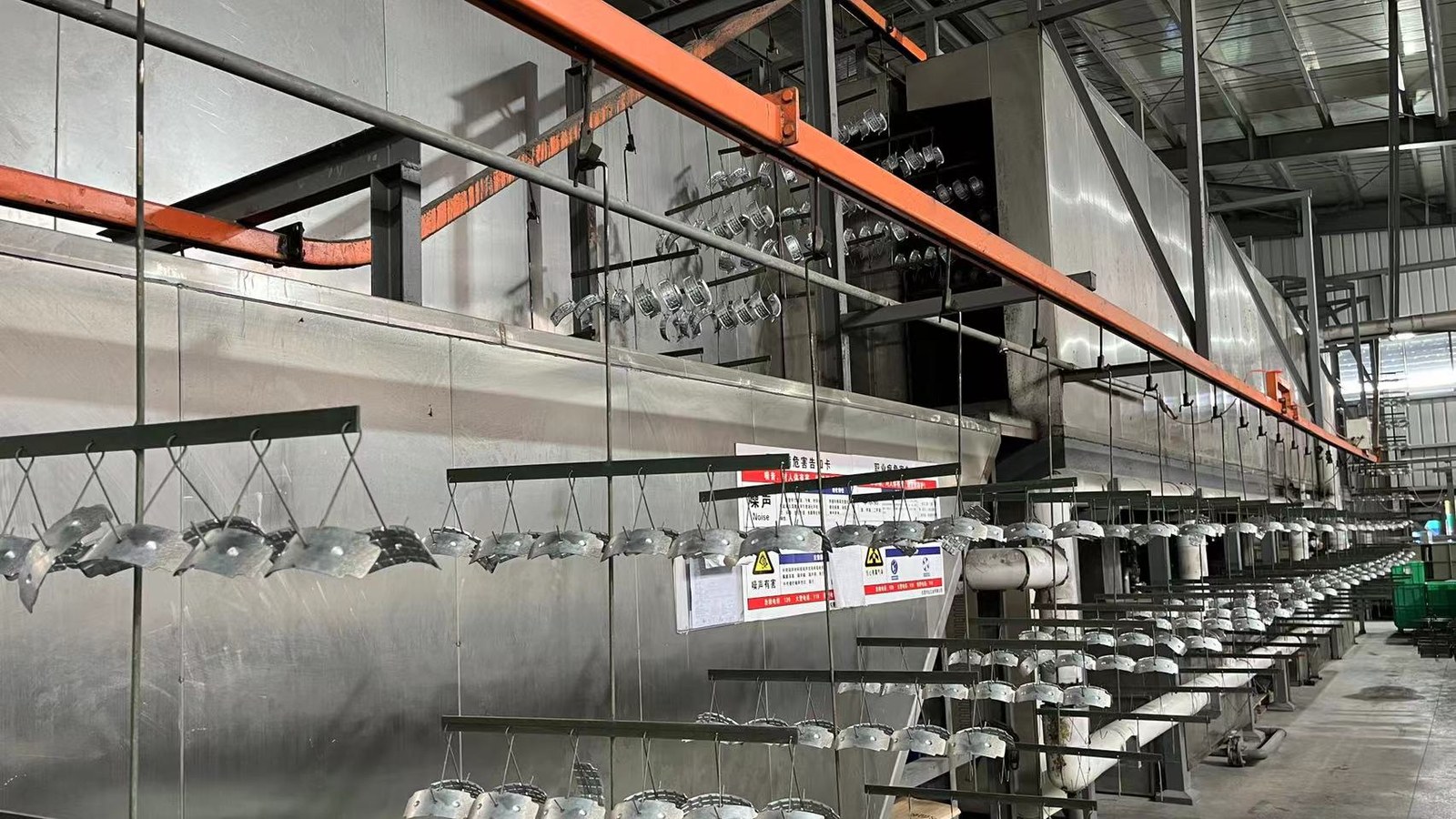
Six reasons a finish survives the assembly line
- Finish scheduled with the part — The coating date is booked when the machining date is booked, so the part does not sit in a corner waiting for a plating bath.
- Colour matched to a physical standard — We match against your sample or a Pantone reference and keep the approved sample on file, so a reorder two years later still matches.
- Masking decided at drawing review — Threads, bearing seats and electrical contact areas must not be coated. We agree the mask points before the first batch, not after.
- Corrosion performance stated as a number — Salt spray hours are quoted against a named standard, so you can compare the number with your own specification instead of accepting "good corrosion resistance".
- Cosmetic standard agreed in writing — What counts as a scratch, a colour drift or a pinhole is agreed before production, which is what prevents a dispute at incoming inspection.
- Inspected by our own QC team — Thickness, adhesion and colour are checked before packing, including work at our affiliated plants.
Process capacity by finish
| Process | Range |
|---|---|
| Anodizing | Type II sulfuric, clear or dyed; 10–25 µm standard, 5 µm minimum on request |
| Powder coating | 60–120 µm film, any RAL colour, matte to gloss |
| Plating | Zinc, nickel, tin, chrome |
| Salt spray | 24 – 500 hours neutral, ISO 9227 / ASTM B117, rated to ASTM D1654 |
| Colour tolerance | ΔE ≤ 1.0 under D65 |
| Max part length | 2,000 mm for coating and anodizing |
| Lead time | 20–40 days including finishing, after drawing approval |
Finishes we run and what each one suits
Anodizing for aluminium (clear, black, dyed colours) · Powder coating for steel and aluminium · Zinc, nickel, tin and chrome plating · Passivation for stainless · Polishing, brushing and shot blasting · Laser marking and pad printing for logos and part numbers.
Which process is right depends on the substrate, not on preference: anodizing only works on aluminium, zinc plating on steel is the standard answer for outdoor parts, and stainless usually needs passivation rather than a coating. If the substrate and the requested finish do not match, we say so before quoting.
Pre-treatment decides whether the coating stays on. Oil, oxide and machining residue all sit between the metal and the film, and a coating over them passes the first inspection and fails in service. Degreasing and descaling are part of the process, not an extra: if a part arrives with heavy rust or old paint, we strip it first and quote that as a separate line.
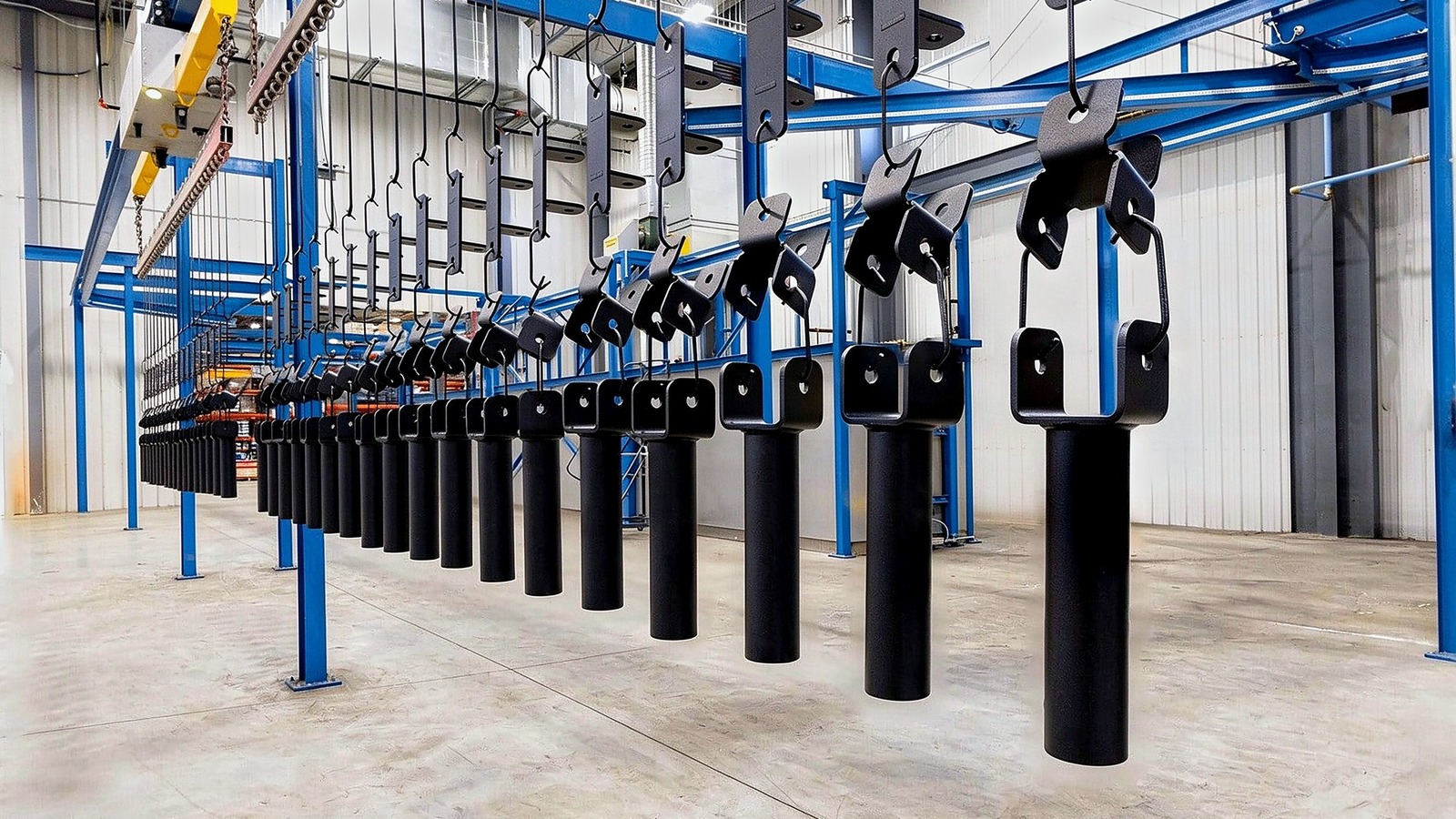
Parts we finish most often
Handles and grab bars · Face plates and bezels · Outdoor brackets and mounts
Trim and decorative covers · Housings with colour requirements · Parts that need a masked thread or contact area
Racking marks are the hidden cost of coating. Every part hangs on a hook or sits on a jig, and the contact point stays bare. On a visible face that means a touch-up, and touch-up is never invisible. We plan the racking point on a hidden edge at the same time as the masking, so the finished part ends up with two bare spots — both where nobody looks.
On small parts the racking can cost more than the coating itself, because fewer parts fit on the line. That is why a 30 mm part sometimes carries a higher finishing cost than a 300 mm panel.
Three finish details that move the price
Coating changes dimensions.
Powder coating adds roughly 60–120 microns per side, and anodizing grows the part by about half the film thickness. If a bore has to stay in tolerance, it is either masked or cut oversize before coating — decided at drawing review, not after the parts come back.
Threads and contact surfaces cannot be coated.
A coated thread will not take a nut cleanly, and a coated earth point will not conduct. Tell us which threads must stay bare and we mask them. This is the single most common cause of rejected batches in finishing, and it is free to avoid at the drawing stage.
Aluminium and salt spray are a permanent argument.
Sealed anodizing helps, but it does not equal zinc plating on steel. If the part lives outdoors near the coast, say so at quoting stage — the honest answer may be a different substrate rather than a thicker coating.
From sample approval to packed cartons, in six steps
How finished batches are checked
- Film thickness is measured on every batch, not sampled once a month.
- Adhesion is tested by the standard method for the coating type before the batch is released.
- Colour and appearance are compared with the approved sample under agreed lighting.
What to send with a finishing RFQ
Substrate and part drawing · finish type, colour and film thickness · salt spray or adhesion requirement
which areas must be masked · which faces are visible (appearance standard) · packing requirement — separators, bags, orientation
Questions buyers ask about surface finishing
Can you match our brand colour?
Yes, against a physical sample or a Pantone reference. The approved sample stays on file, so later orders are matched to it rather than to a memory.
Will coating change my dimensions?
Yes. Powder coating adds 60–120 microns per side and anodizing grows the part slightly. Bores and threads that must stay tight are masked.
How many salt spray hours can you reach?
24 to 500 hours depending on substrate and process. The number is quoted against the standard you specify, not offered as a vague promise.
Can you finish parts made elsewhere?
Yes, as long as the substrate and pre-treatment are suitable. Send a sample first and we will confirm before committing to a batch.
Do you mask threads?
Yes. Masking is planned at drawing review. Mark the threads and contact areas on the drawing and they stay bare.
What is the minimum batch?
Small batches are possible because the line runs continuously. Send the quantity and we will confirm whether it can be scheduled with another run of the same finish.
Send the drawing with the finish called out. We will confirm the process, the film thickness and the appearance standard before quoting.