
Assembly and Sub-Assembly for Finished Hardware
Components, inserts, fasteners and labels combined into one unit, packed to your part number.
What we assemble, and where our boundary sits
Most of our customers do not buy parts. They buy finished units that arrive at the line ready to install. Assembly is the step that turns a shipment of brackets, screws and plastic covers into one box with one part number — and the step where a supplier either removes work from your line or hands you a new set of problems.
We assemble our own parts and customer-supplied parts at the same bench. That matters when a project involves a casting from the affiliated plant, a stamped bracket, a molded cover and a purchased fastener: all of them arrive at one bench, are checked against one bill of materials, and leave as one unit.
Typical work is bracket assemblies with threaded inserts, kits with several parts packed as a set, and finished units that go straight to a retail or kitting line. Every unit is checked against the BOM and, where you specify it, against a first-article sample kept at the bench.
Assembly is worth doing at the supplier when the unit is built from parts we already make, when the customer’s line has no space or labour for kitting, or when the unit must be tested before it ships. It is worth less when components come from five different suppliers and the freight to bring them together costs more than the labour saved. In that case we say so and quote parts only.
The other reason to assemble here is traceability: one batch record, one inspection standard and one party to call when something is wrong, instead of a conversation between three suppliers who each believe the fault is elsewhere.
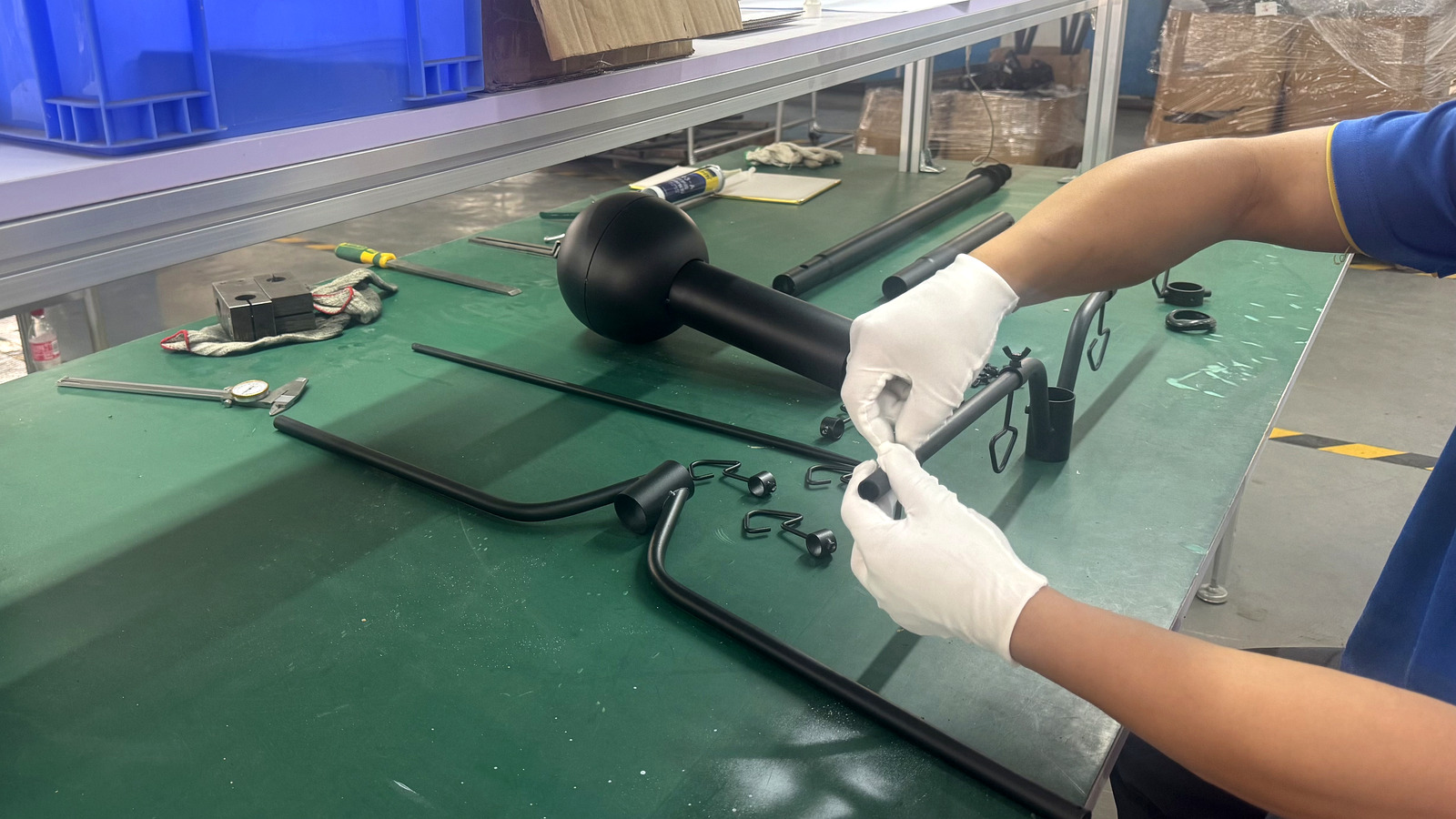
Six reasons sub-assembly happens next to the machines
- One bill of materials, one inspection — Parts from casting, stamping and molding come to the same bench, so a missing insert or a wrong screw is caught here instead of on your line.
- Customer-supplied parts handled alongside ours — Send us a component and we hold it in a controlled area, count it, and reconcile the count against the finished quantity.
- Torque and fit checked to specification — Where a fastener has a torque value, it is set on a torque-controlled driver and checked on a sample, not judged by feel.
- Kitting and mixed-part packing — Sets can be packed by part number, colour or size into one carton, with a packing list that matches what is actually inside.
- Labelling to your template — Barcode labels, carton marks and retail labels printed to your artwork, so the carton is received straight into your system.
- Inspected by our own QC team — Final inspection against the BOM and the approved sample before the carton is sealed.
Bench and line capacity
| Parameter | Range |
|---|---|
| Assembly lines | Three lines for sub-assembly, inserts, kitting and final packing |
| Inspection | AQL 1.5 major / 2.5 minor / 0 critical to ISO 2859-1, level II; 100% check on request |
| Minimum order | Negotiated per build; typically 500 units per run, below that hand assembly is quoted separately |
| Labeling | Barcode, carton mark and retail label to your artwork |
| Components handled | Our own production plus customer-supplied components |
| Lead time | 20–40 days including assembly, after drawing approval |
Work we take on
Threaded inserts (heat-set, ultrasonic, press-fit) · Screws, rivets and retaining clips · Springs and seals · Molded covers and metal brackets · Bearings and bushes · Printed labels, bags and cartons.
If a component is not something we make, send it in. We hold customer-supplied material in a separate area, record the incoming count, and reconcile it against the finished quantity — so a shortage of ten pieces shows up as a shortage of ten pieces, not as a mystery at your line.
Packing specification belongs on the drawing. A unit that arrives scratched has failed, whatever its dimensions, and the argument is always about who pays for it. We agree the packing method — separators, bag, orientation, units per layer — before the first shipment, and photograph the first carton. That photograph ends most disputes before they begin.
Assemblies we build most often
Bracket assemblies with inserts · Multi-part hinge and latch sets · Kits packed by set or by part number
Finished units with labels and retail packing · Parts sorted and re-packed for line feeding · Spare-part kits with matched quantities
Mixed-material assemblies fail at the joint, not at the part. A stainless screw run into an aluminium bracket will gall and seize; a steel insert over-torqued in a plastic boss will crack the boss weeks later. Both are solved by choosing the fastener and the boss together at design review, rather than by asking the line to tighten less.
The third joint problem is access. If a fastener can only be reached with a straight driver, the design has to give it clearance, or the assembly needs a custom bit — cheap to design in, expensive to add afterwards.
Three assembly details that decide the cost
Assembly tolerance is the sum of part tolerances.
If three parts each carry ±0.2 mm and they stack in a line, the assembled unit can be out by more than the customer expects. We check the stack-up at drawing review and tell you which single dimension to tighten — usually one, not all three.
Fastener choice decides service life.
A self-tapping screw into plastic loses preload after a few service cycles; a heat-set insert does not. If the unit will be opened for maintenance, say so and we will quote the insert instead of the screw.
Packing is part of the product.
A unit that arrives scratched has failed, whatever its dimensions. Separators, orientation in the carton and units per layer are agreed before the first shipment, not after the first complaint.
From components to sealed cartons, in six steps
How assembled units are checked
- The first assembly is built, checked and approved before production starts.
- Torque and fit are checked on a sample during the run, not only at the end.
- Every carton is checked against the BOM before it is sealed.
What to send for an assembly quote
Assembly drawing and BOM with part numbers · torque or fit requirements · packing method and units per carton
label artwork and barcode format · which components you supply and which we make · inspection standard — 100% or AQL
Questions buyers ask about assembly
Can you assemble parts we supply?
Yes. Send the components and we hold them in a controlled area, count them, and reconcile the count against the finished quantity.
Can you pack several part numbers in one carton?
Yes. Sets can be packed by part number, colour or size, with a packing list that matches the contents.
Do you print our labels?
Yes, to your artwork, including barcode and carton marks. Send the label file and the barcode format with the first order.
What inspection standard do you use?
100% visual and functional check on assemblies, or AQL sampling to ISO 2859-1 level II at 1.5 major / 2.5 minor / 0 critical if you specify it.
What is the minimum batch?
500 units per run. Below that, hand assembly is quoted separately.
Can you hold stock and ship against a schedule?
Yes, for repeat programs. The stock level and release schedule are agreed per project.
Send the assembly drawing, the BOM and the packing requirement. We will come back with the labour cost, the packing method and a sample build date — usually within one business day.