
Precision Laser Cutting for Custom Metal Parts
Flat-sheet laser cutting in Dongguan, with bending, welding and finishing planned on the same schedule.
Where laser cutting wins, and where it stops paying
Laser cutting is the shortest route from a drawing to a metal part. There is no tooling, so the first piece and the thousandth cost the same per unit, and a design change costs a new program instead of a new die. That makes it the right process for brackets, panels, plates and enclosures — and the right process for the prototypes that later move to stamping.
We cut flat sheet, then move the part straight into bending, welding, tapping or finishing without a second purchase order and without a second supplier to chase. Because the same team sees the flat pattern and the formed part, a slot that would collide with a bend gets caught at the drawing stage instead of at assembly.
Most of this work is repeat production for OEMs: mounting brackets, cover panels, reinforcement plates, chassis blanks and weldment parts. The first article is checked against your print before the run continues, and the same program is reused on every reorder, so part 1 and part 1,000 measure the same.
Laser cutting wins on speed to first part and on design changes: no tooling, one program, next-day parts. It loses on unit price once the volume justifies a die, and on parts that need a deep draw or a closed hollow section. For most projects the honest route is laser for the prototype and the first production run, then a stamped version once the design stops moving.
We quote both when the quantity is near the crossover. A customer who sees the two numbers usually changes the plan himself — either by committing to volume early, or by keeping the design flexible because the change is cheap.
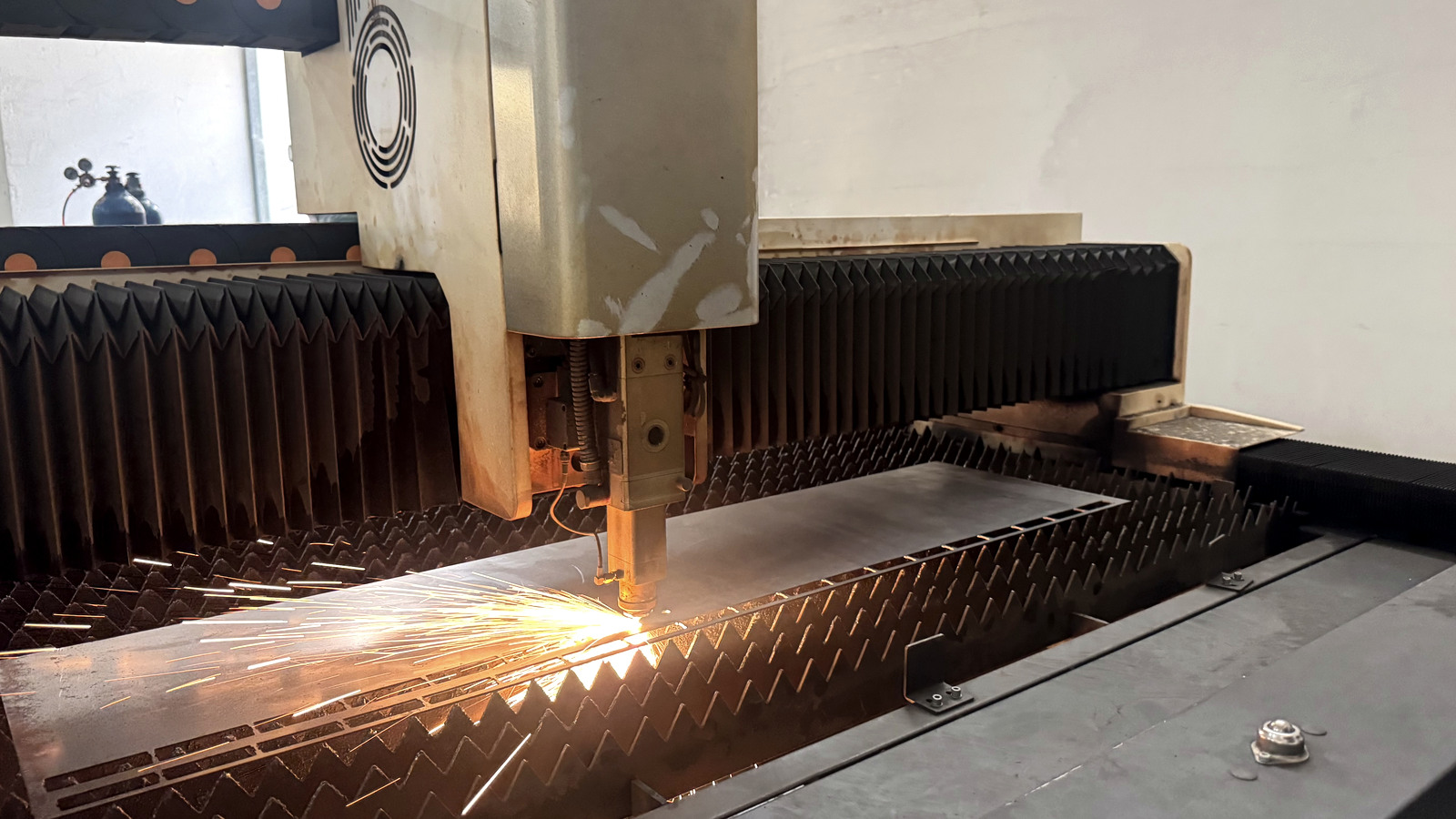
Six reasons flat parts arrive ready to form
- No tooling, no tooling cost — A new part costs a program, not a die. Design changes stay cheap until volume justifies stamping.
- One program, repeatable reorders — Nesting and cutting parameters are locked in once, which is why a reorder matches the first shipment.
- Reviewed before it is cut — We read the drawing first and tell you when a slot is narrower than the material, or a hole sits too close to a bend line.
- Cutting plus forming on one schedule — Bending, welding and finishing are sequenced with the cutting, not quoted separately by somebody else.
- Deburred and measured before packing — Edges are dressed and dimensions checked against the drawing, so parts reach your line ready to assemble.
- Inspected by our own QC team — Every batch is checked before packing, including work scheduled at our affiliated plants.
Cutting capacity by material and thickness
| Parameter | Range |
|---|---|
| Machines | Six fibre lasers, cut in-house — not subcontracted |
| Max sheet size | 1,000 × 6,000 mm |
| Max thickness | 10 mm mild steel |
| Materials | Mild steel, stainless 304 / 316L, aluminium 5052 / 6061, galvanized sheet, brass, copper |
| Cutting tolerance | ±0.10 mm |
| Minimum hole | 1.0 × sheet thickness |
| Order quantity | One piece for a prototype; production runs from 100 pieces |
| Lead time | 20–40 days after drawing approval, depending on quantity and finishing |
Sheet materials we cut and the edges they leave
Carbon and mild steel (SPCC, Q235) · Stainless (304, 316L) · Aluminium (5052, 6061) · Galvanized sheet · Brass and copper.
Finishing on request: deburring, tumbling, powder coating, zinc plating and anodizing — all scheduled in the same plan as the cutting, so the parts do not leave one supplier and queue at another.
Sheet flatness is not something the drawing guarantees. Cold-rolled sheet arrives with residual stress, and cutting releases it, so a long narrow part can bow after cutting even though the program was correct. Where flatness matters we either choose a nest position that balances the stress or plan a flattening step after cutting. It is worth mentioning if the part sits flat against another surface.
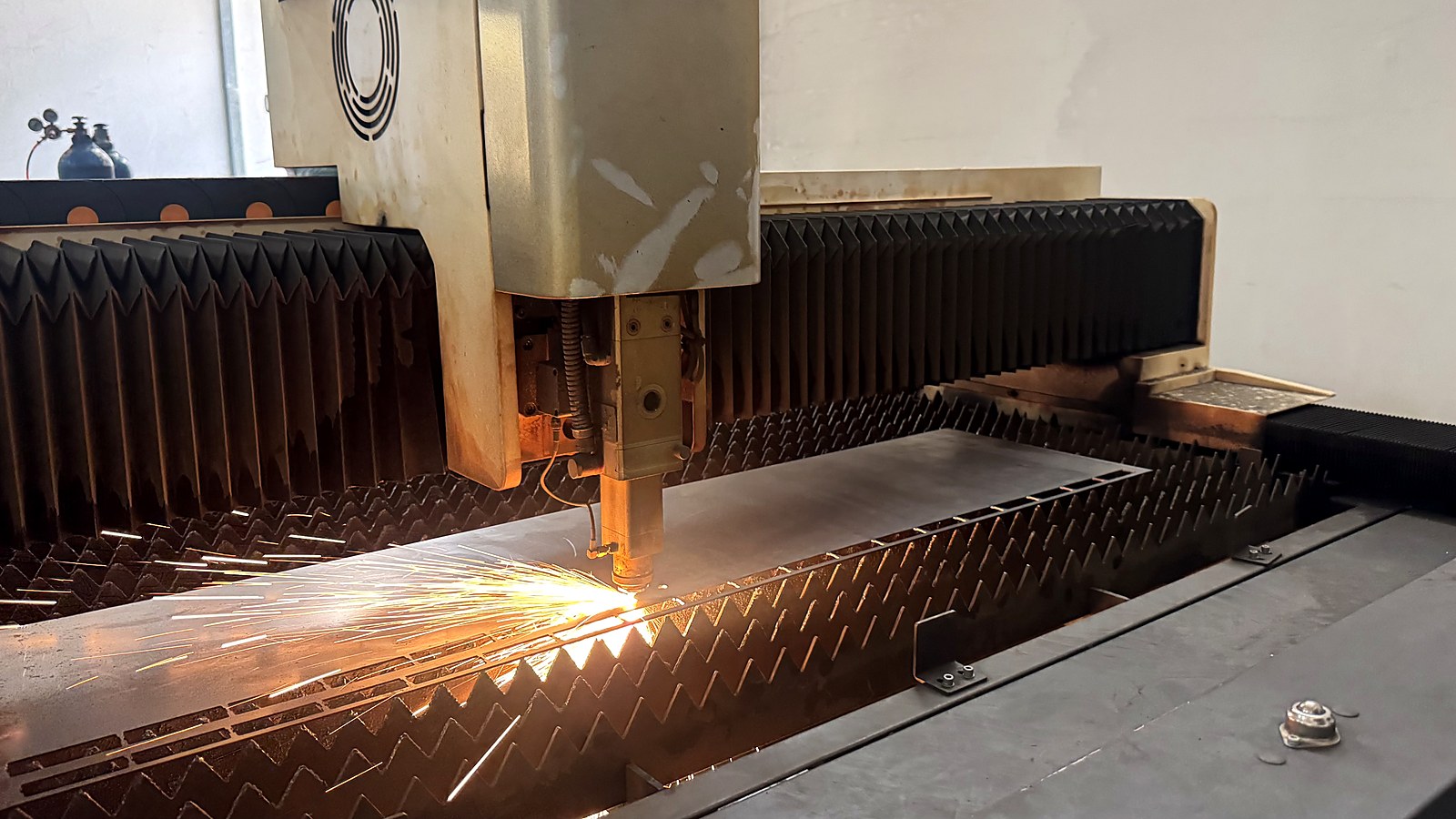
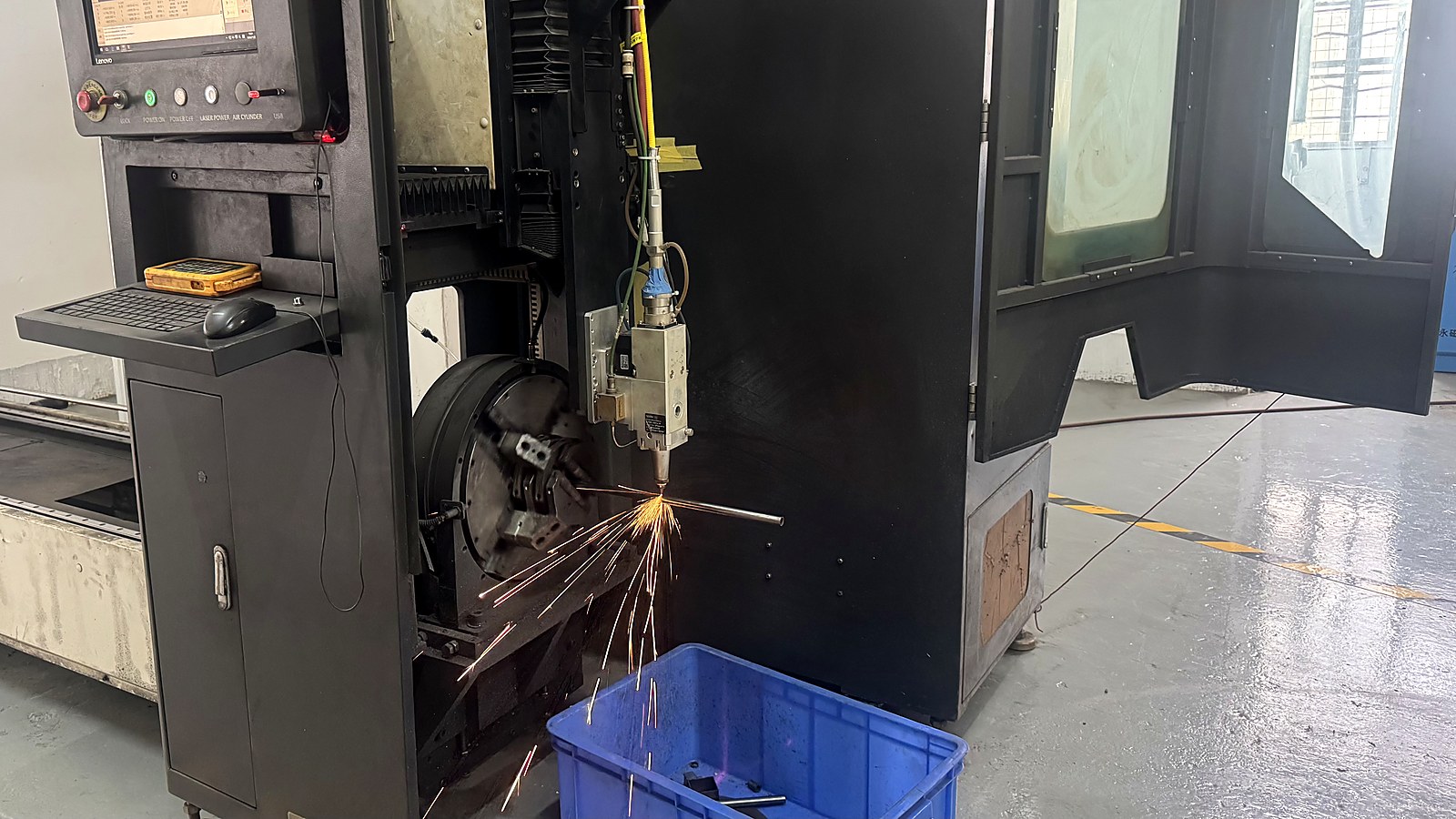
Parts we cut most often
Mounting brackets and L-plates · Enclosure and cover panels · Chassis and frame blanks
Reinforcement and gusset plates · Vent and grille panels · Weldment blanks for the next operation
Material grade changes the cut, not only the speed. Stainless needs high-pressure nitrogen for a clean edge; mild steel cuts faster with oxygen but leaves an oxidized face that has to come off before painting. If the part will be powder coated, we cut with the process that leaves a paintable edge rather than the fastest one, because a coating over an oxidized edge fails there first.
Assist gas also decides the colour of the cut face on stainless. If that edge is visible on the finished product, say so, and we will cut for appearance instead of for speed.
Three geometry limits worth checking first
The kerf is not zero.
The beam removes 0.1–0.3 mm of material, so a hole drawn at nominal comes out slightly oversize and a slot comes out slightly wider. Where a hole is a locating hole, we cut it undersize and ream or drill it afterwards.
Heat goes somewhere.
Thin sheet and tightly nested patterns can pull or discolour at the edge. We leave a web between parts and choose the cut sequence to keep heat away from thin features — which is why the nesting, not just the drawing, decides how flat the part stays.
Hole-to-bend distance.
A hole closer to a bend line than about 2.5 times the material thickness will distort when the part is formed. If the drawing puts a hole there, we flag it and propose either moving the hole or cutting it after bending.
From file to packed cartons, in six steps
How cut parts are checked
- Material is verified against the grade you specify on receipt.
- The first article is measured and approved before the run continues.
- Every batch is checked by our own QC team before packing — including work at our affiliated plants.
What to send for a cutting quote
2D drawing (DXF / DWG / PDF) · material grade and thickness · the two or three dimensions that must hold
surface finish requirement · annual or per-order quantity · packing and labeling rules
Questions buyers ask about laser cutting
What file formats do you accept?
DXF, DWG, STEP and PDF. A dimensioned sketch also works for a quote.
What is the minimum order?
One piece for a prototype. Production pricing starts around 100 pieces.
Can you bend and weld the same parts?
Yes. Forming and welding are sequenced with the cutting, not quoted separately.
What tolerance can you hold?
±0.10 mm on cut features, depending on material and thickness. Send the drawing and we confirm before quoting.
Do you cut aluminium and stainless?
Yes, including 5052 and 6061 aluminium and 304 / 316L stainless.
How fast do I get a quote?
Within one business day. If a drawing is incomplete, we tell you what is missing in the same reply.
Have a drawing? Send it and we will reply with material, tolerance and lead time — usually within one business day.